What “pure water” means
Normal tap water contains dissolved minerals. If ordinary water is left to evaporate on glass, those minerals can remain behind. A pure-water system filters and deionises the water before use so the final rinse contains extremely low levels of dissolved solids.
The brush does the cleaning
The water-fed brush does the physical cleaning, agitating the glass, edges, frames and accessible sills before the loosened dirt is flushed away with purified water.
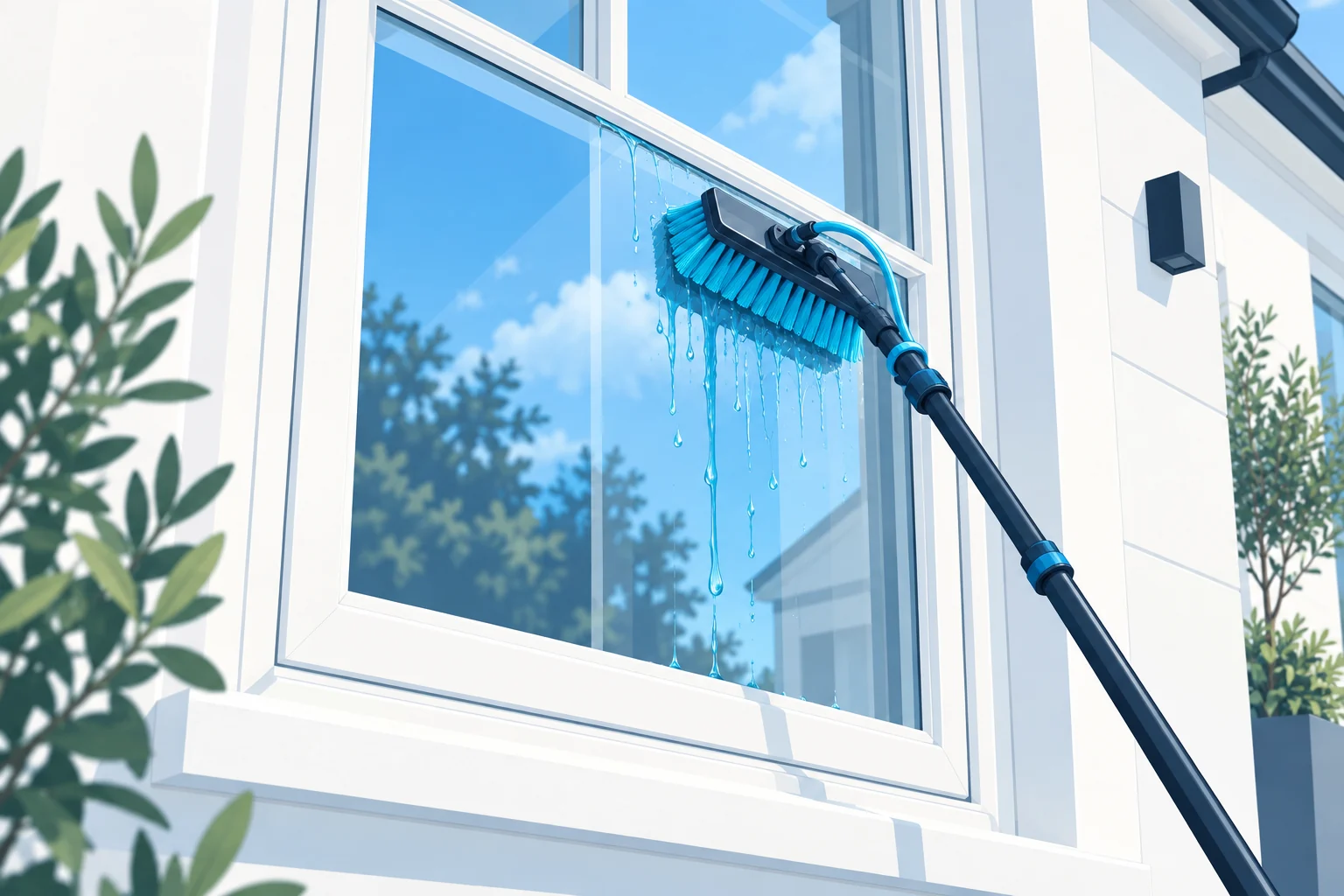
Why the windows are left wet
With this method the final rinse is normally left to dry naturally. That can look unusual if you are used to a squeegee, but it is deliberate: the aim is to leave only purified rinse water on the surface rather than detergent or mineral-rich tap water.
What 0 ppm means
We use a TDS meter to check the dissolved-solids level of the purified water. A 000 ppm reading is the target for the rinse water, with the filtration equipment checked and maintained as part of the process.
Ground-based reach
Carbon-fibre water-fed poles allow many first-, second- and higher-storey windows to be reached from the ground. That reduces the amount of ladder work around the property, although every building still needs to be assessed for safe access and obstructions.
When another method may be needed
Some marks such as paint, cement, adhesive, silicone, mineral deposits, oxidation and scratches may need specialist treatment or may sit outside a standard maintenance clean. Clear photos help us identify these before quoting.
Why this matters for Maidstone customers
The method lets us clean the whole exterior window area consistently on a regular route while carrying our own purified water. Customers do not normally need to provide an outside tap or electricity.